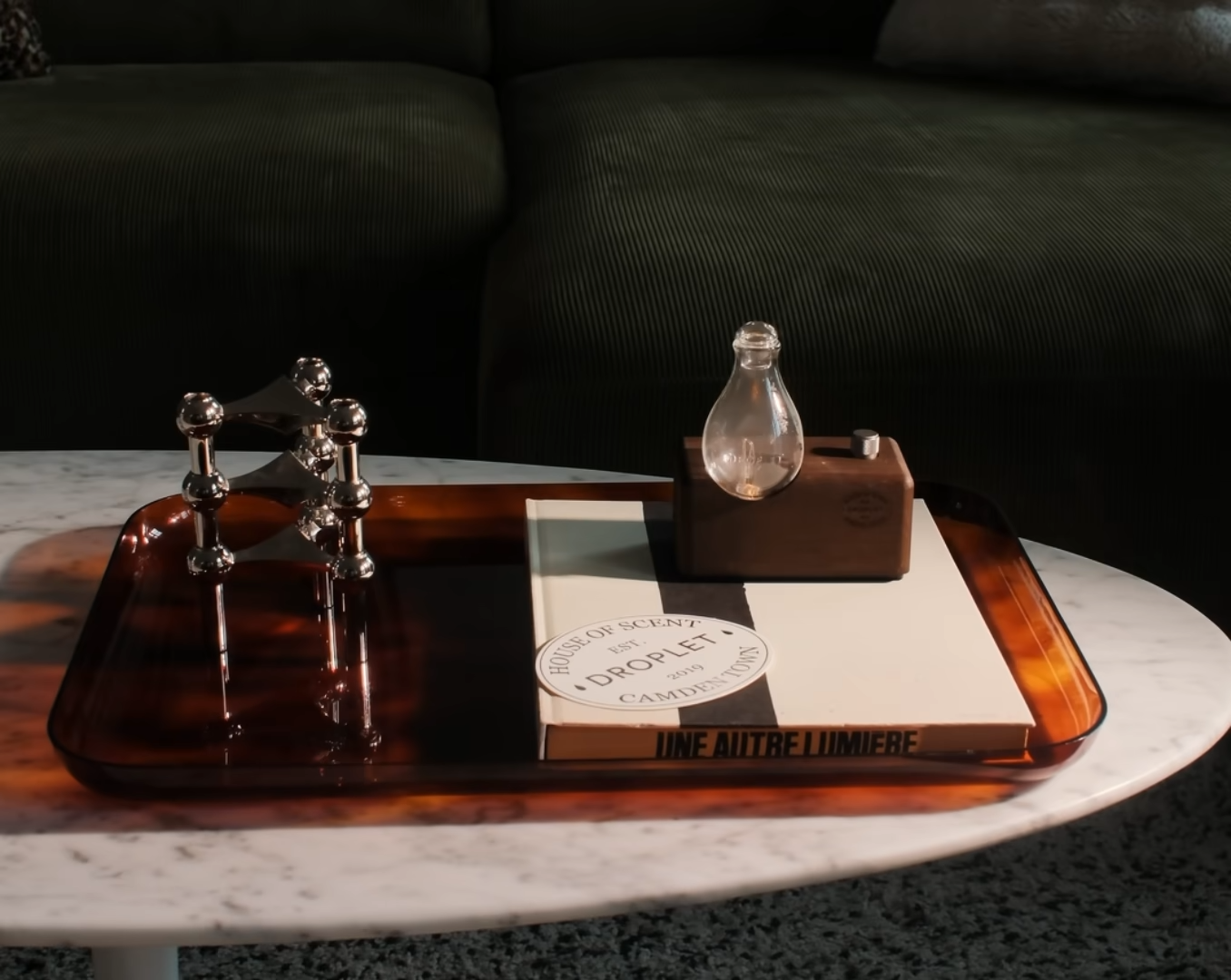
Droplet found me the way most brands do these days: an Instagram ad. And honestly? I stopped scrolling.
It looked uber retro and just so cool. The kind of thing that belongs next to a record player in a modern, minimal home. It didn't look like an air diffuser at all.
Not long after, I came across Reia's ceramic talisman, and it caught my eye for exactly the same reason. Two brands, one category, both doing the complete opposite of what you'd expect.
What scent usually looks like
Think about the last scent diffuser you saw. Chances are it was some sort of dome-shaped machine. Plastic, glowing, perfectly fine at its job, and something you'd probably tuck behind a plant.
That's the category standard. Products designed to do a job, not to belong in a room. Which is exactly why these two stood out.
Two brands doing the exact opposite
Droplet's Scent Amplifier
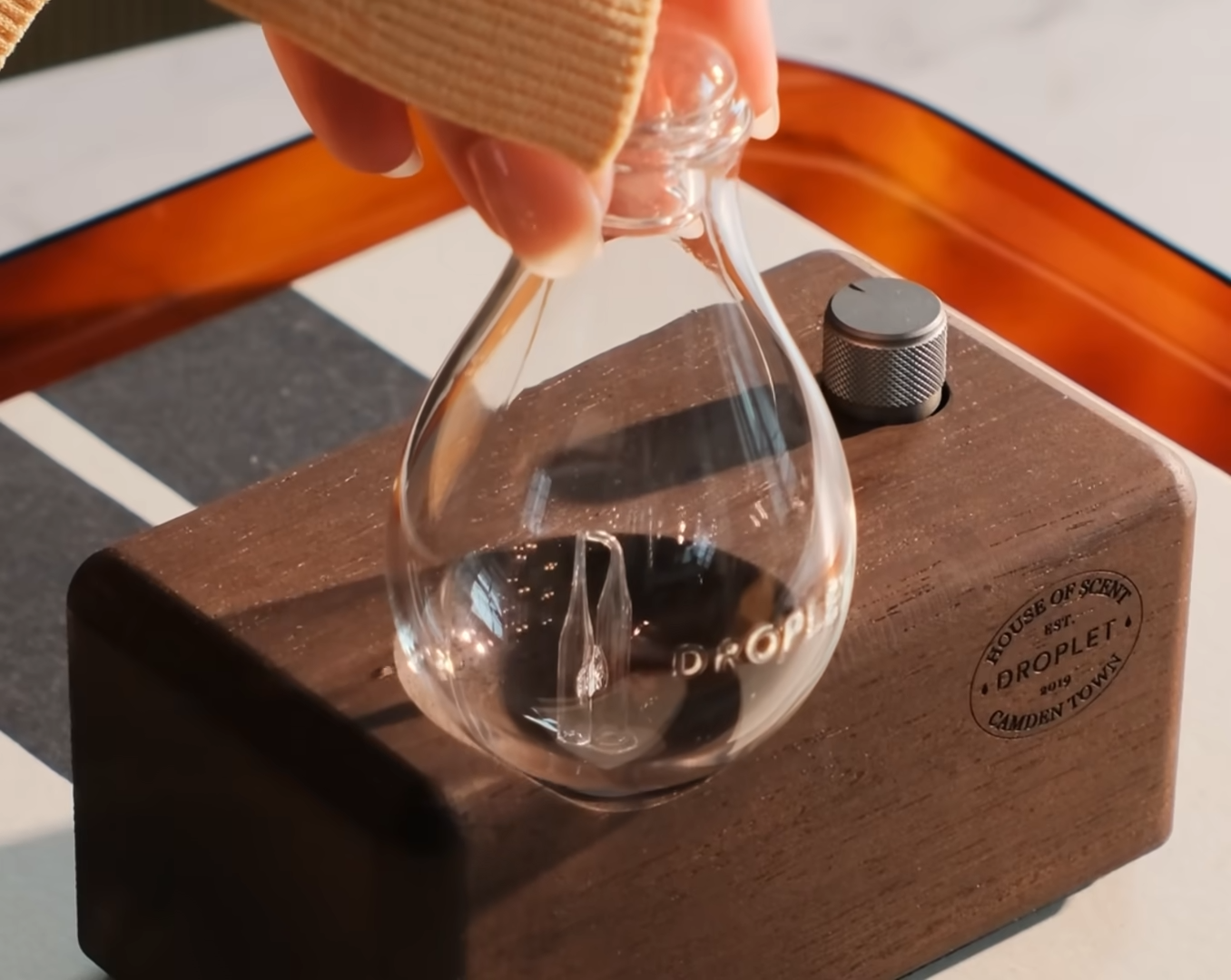
Droplet took its cue from hi-fi, not aromatherapy. The Scent Amplifier is styled like a valve amp, with a walnut-toned wooden base, a hand-blown crystal glass vessel shaped like a vintage light bulb and a single silver dial. Switch it on and the base glows a warm, tungsten-like amber.
It's designed to be shown off as a sculptural object, not hidden away like an appliance. It's also stocked at Selfridges, at £80 on its own or £125 with a set of six oils.
Reia's ceramic talisman
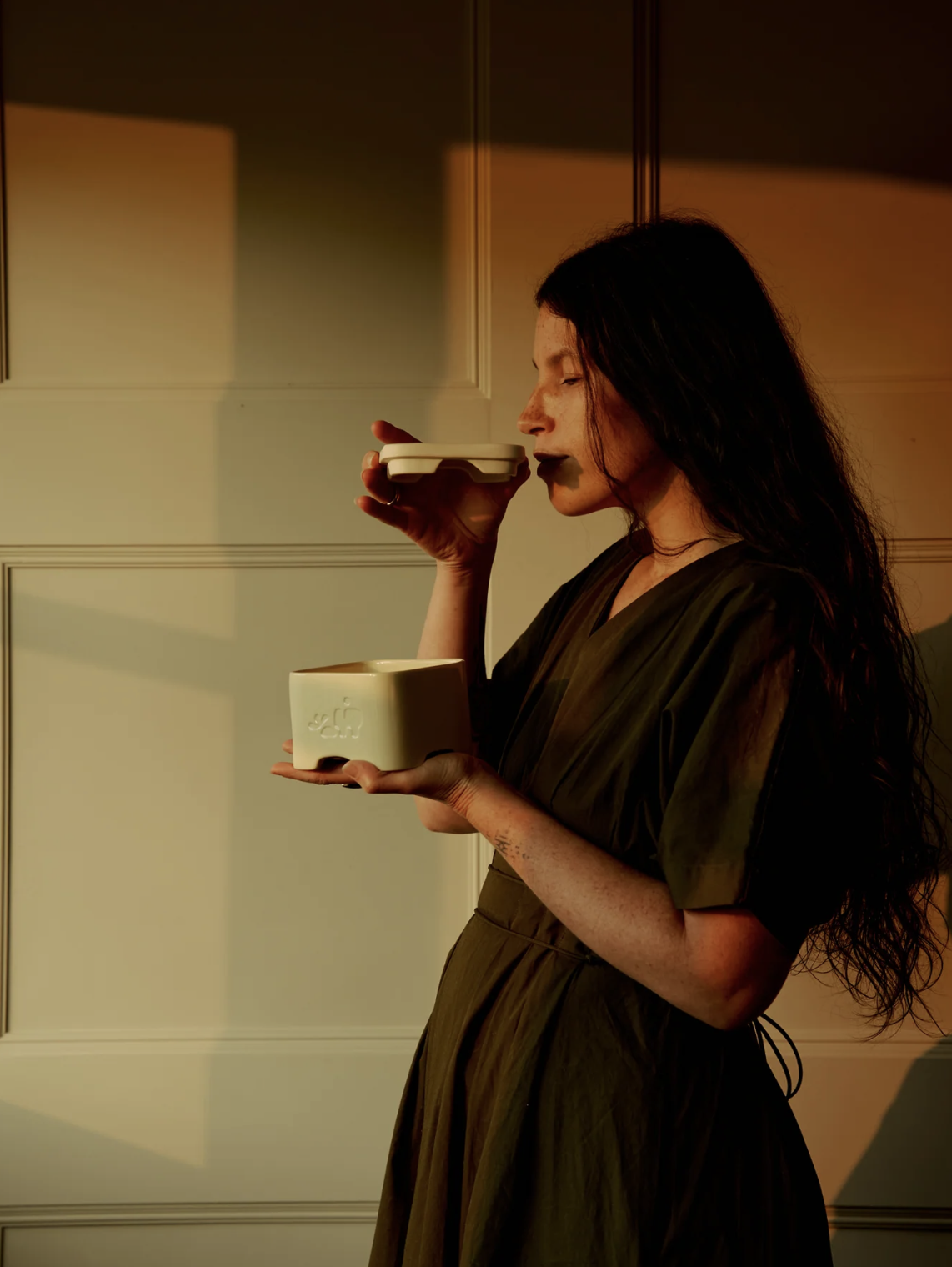
Reia's SERRA talisman, made in collaboration with interior designer Sophie Ashby's Sister by Studio Ashby, is a butter-yellow ceramic vessel that slowly scents the room it sits in.
According to Livingetc, the brief was never to make another candle, reed diffuser or room spray. It was to make an object that happens to carry scent, and one worth keeping long after the scent has faded.
Why an ornament beats an appliance
Both of these are made to look great in the home, but neither falls into the typical category standards. You'd happily display either one in a living room, a bedroom or even an office. They stop being something that's doing a job and become an ornament. Something that belongs in the space.
That shift is what lets a brand charge more. An appliance gets compared on price and spec. An object people want on their shelf gets judged on how it makes them feel, and how it makes their home look.
It also means you hardly need to brand it. Droplet is so distinctive that you know it's a Droplet without seeing a logo, because nothing else looks like it. That's the dream.
What home founders can take from it
We were really conscious of this when we created Adora. We wanted people to leave the bottle out on the worktop, which meant designing something they'd actually want to look at.
1. Design for the shelf, not the cupboard. Ask yourself: would someone happily leave this on display? If the answer is no, that's your biggest opportunity.
2. Don't turn their home into a billboard. Nobody wants their living room covered in logos. For Adora, we went matte black and kept the logo subtle, so if you turned the bottle around, you couldn't see it at all.
3. Break the category standard. If everything in your category looks the same, look the opposite. Droplet borrowed from hi-fi. Reia borrowed from ceramics and interiors. Where could you borrow from?
4. Make the shape your signature. When your product is distinctive enough, it becomes the brand. People will recognise it without needing to read your name.
Is your product worth keeping on show?
Droplet and Reia are great examples of a few of my brand signals at work: packaging people keep, something ownable beyond the logo and a clear point of view.
My free guide, Worth It: 10 Brand Signals That Make Homeware Customers Glad to Pay More, walks you through all ten, with a simple "try this" for each so you can start straight away.
If any of them resonate, I'd love to chat. Book a brand call and we'll talk through where your brand is now and where it could go.