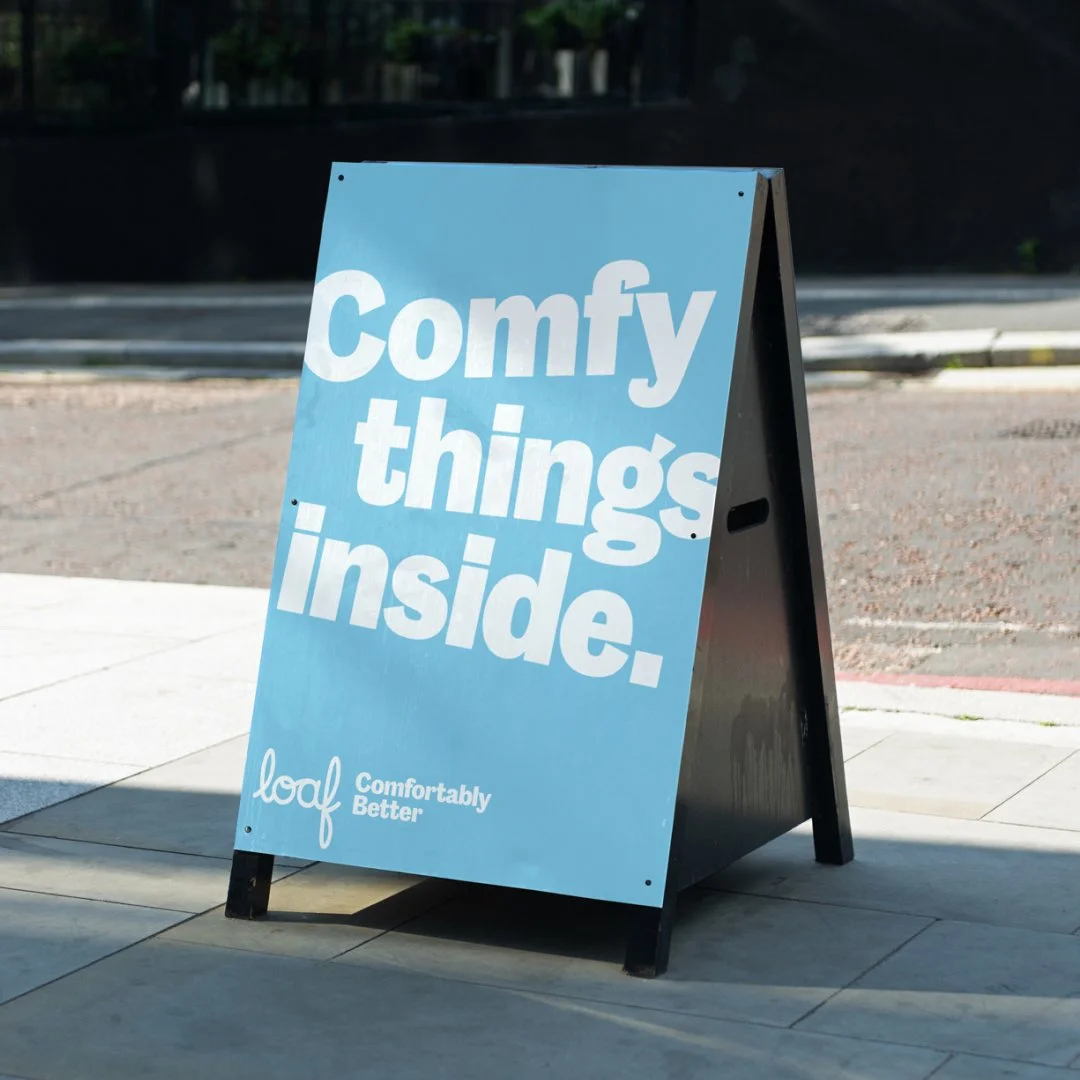
I grew up with DFS, Sofology and SCS. The big sofa brands sitting on every retail park, with an ad break that never seemed to end. They always felt either a bit salesy or a bit stuffy.
Then I land on Loaf's website or Instagram, and it's like someone witty and personable is talking to me. It doesn't feel like a sofa company trying to sell me something. It feels like a friend with great taste.
That difference is worth paying attention to, because Loaf is a brilliant lesson in three of the brand signals that make customers happy to pay more.
A crowded category that leads with product
Sofas are a seriously saturated market. Head to most UK online sofa brands and you'll see the same thing: lead with the product, then the deal.
When I looked in early November, Darlings of Chelsea and sofa.com both opened with Christmas delivery, category tiles and interest-free finance. Swyft led with a Halloween sale of up to 40% off, plus an extra discount code, and names its sofas Model 01 to Model 19. Tetrad does better, leading with its handmade Lancashire heritage, but it's still telling you about the sofa rather than the person sitting on it.
None of these are bad businesses. But they lead with the functional: fabrics, sizes, delivery times, finance. What they rarely tell you is what the sofa says about you, how it'll feel when you're chatting to your friend on a Saturday night, or what it'll look like on Christmas Day.
Loaf leads with personality
Loaf launched online in 2008 and built a loyal following on comfort, craft and a refreshingly human tone. As it grew, it brought in the team at Otherway to help it scale across stores and online without losing the warmth and wit that made it Loaf.
They repositioned the brand around comfort, as a premium platform in a market full of cheaper alternatives. And you can see three of my brand signals working hard:
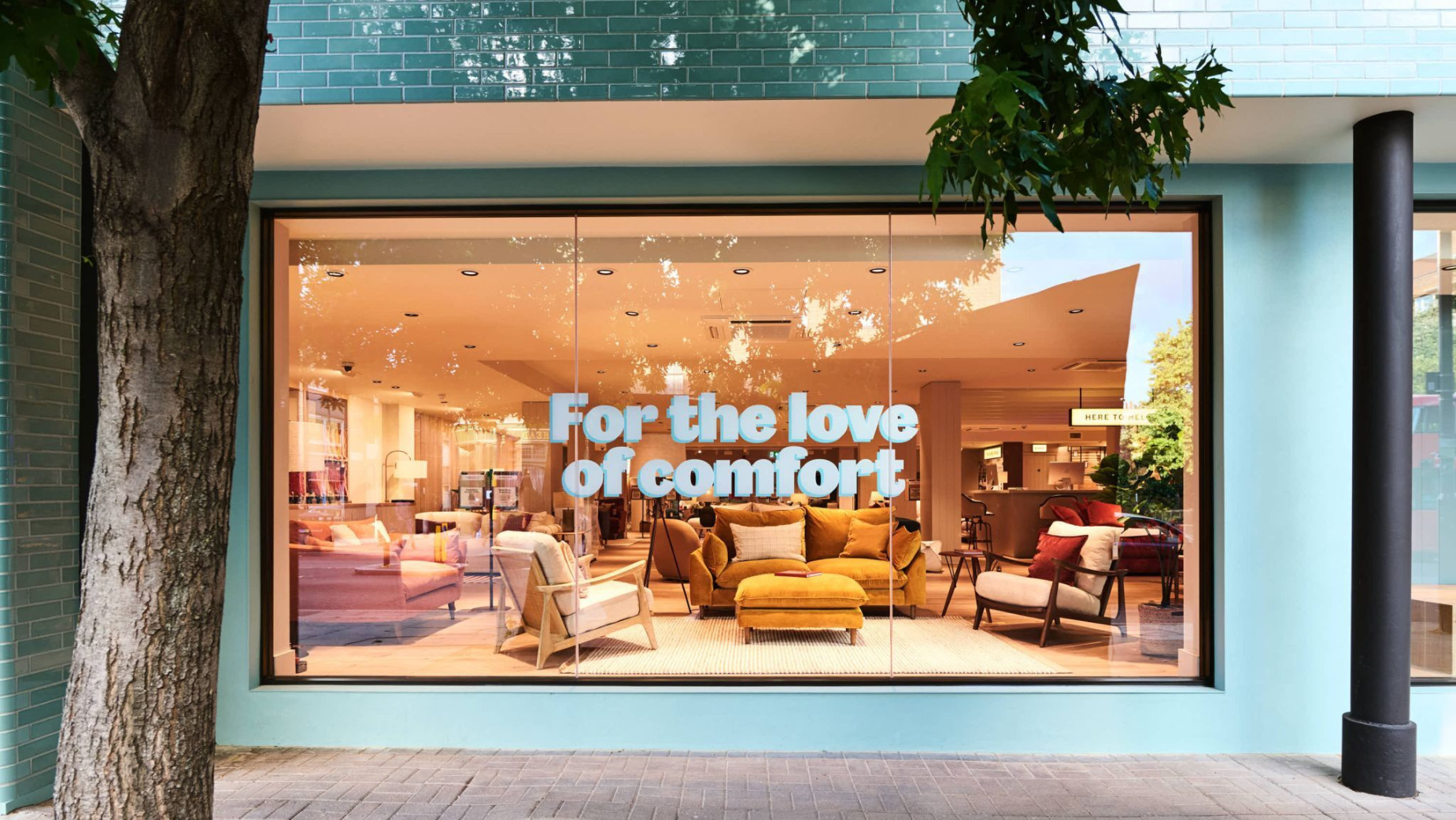
Signal 05: Something ownable beyond the logo. Loaf Blue is front and centre. Cover the name and you'd still know it's them.
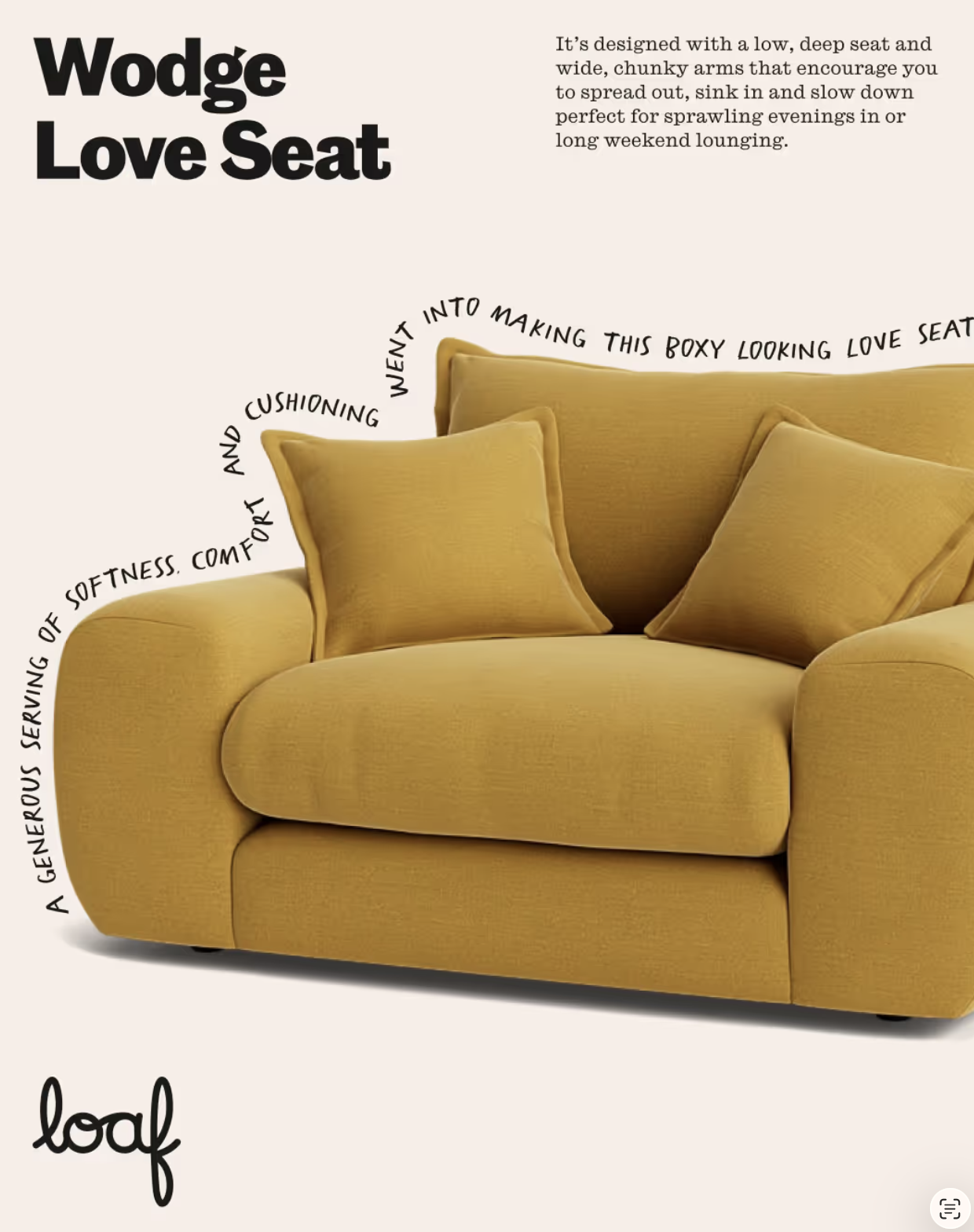
Signal 06: A voice that sounds like someone. Their Instagram reads like a funny friend, not a product listing. Shearling dos and don'ts. A velvet trick. A note that daylight is overrated. That wit is the brand.
Signal 08: Imagery with life. Their sofas are shown in real, lived-in rooms with lamps on, books stacked up and a fire going. You're not looking at a sofa; you're looking at a Sunday afternoon you want.
Emotionally charged, not sales charged
When I say Loaf feels very millennial, this is what I mean. It does for sofas what Simba did for mattresses: a new way of looking at buying something we all thought was boring.
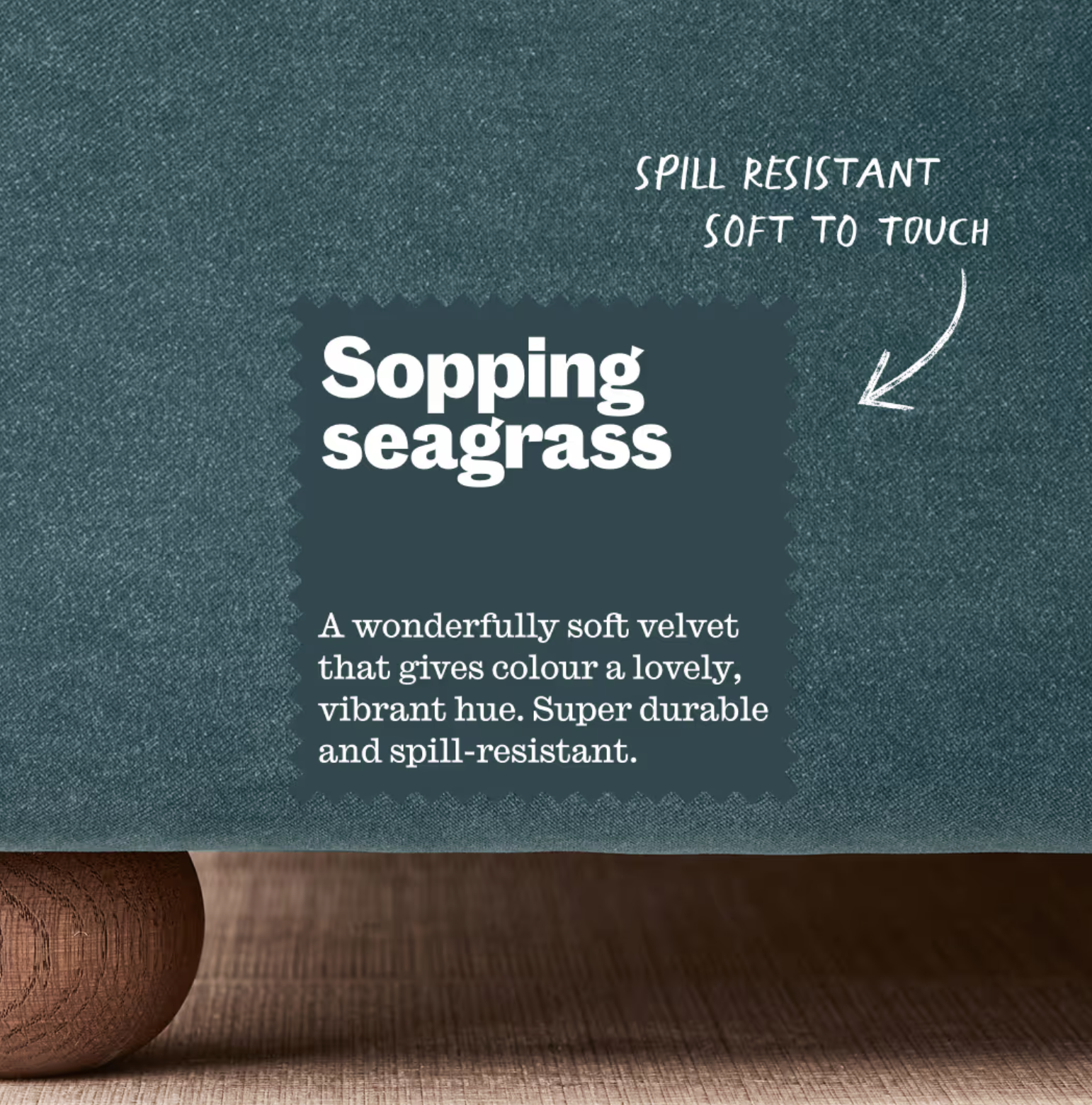
A millennial brand naturally feels a little more aesthetic and a lot less salesy. It's emotionally charged rather than sales charged. It sells the life the product lives in, not just the product.
And that matters more than ever. Fewer of us are buying homewares than a couple of years ago: 78% of UK adults bought homewares in the past year, down from 86% in 2023 (Mintel, 2026). When customers are buying less, the brands they feel something for are the ones they choose, and the ones they'll pay more for.
What smaller founders can take from Loaf
You don't need a Loaf-sized rebrand to borrow Loaf's thinking. Here's where I'd start.
1. Look at what makes you different. If everyone in your category is leading with pure product shots, that's your gap. How can you show me your product is different?
2. Sell the moment, not the spec. Fabrics and dimensions matter, but they're not why people fall in love. Show the Saturday night, the Christmas Day, the lazy Sunday.
3. Lead with a point of view. Burrow does this really well. Their Good for Nothing campaign was a play on words that celebrated the joy of doing absolutely nothing, which is exactly what a sofa is for. One clear idea did more than a hundred product shots.
4. Let your voice do the talking. Write like a witty, personable friend, not a stuffy salesperson. If you wouldn't say it out loud to a customer, rewrite it.
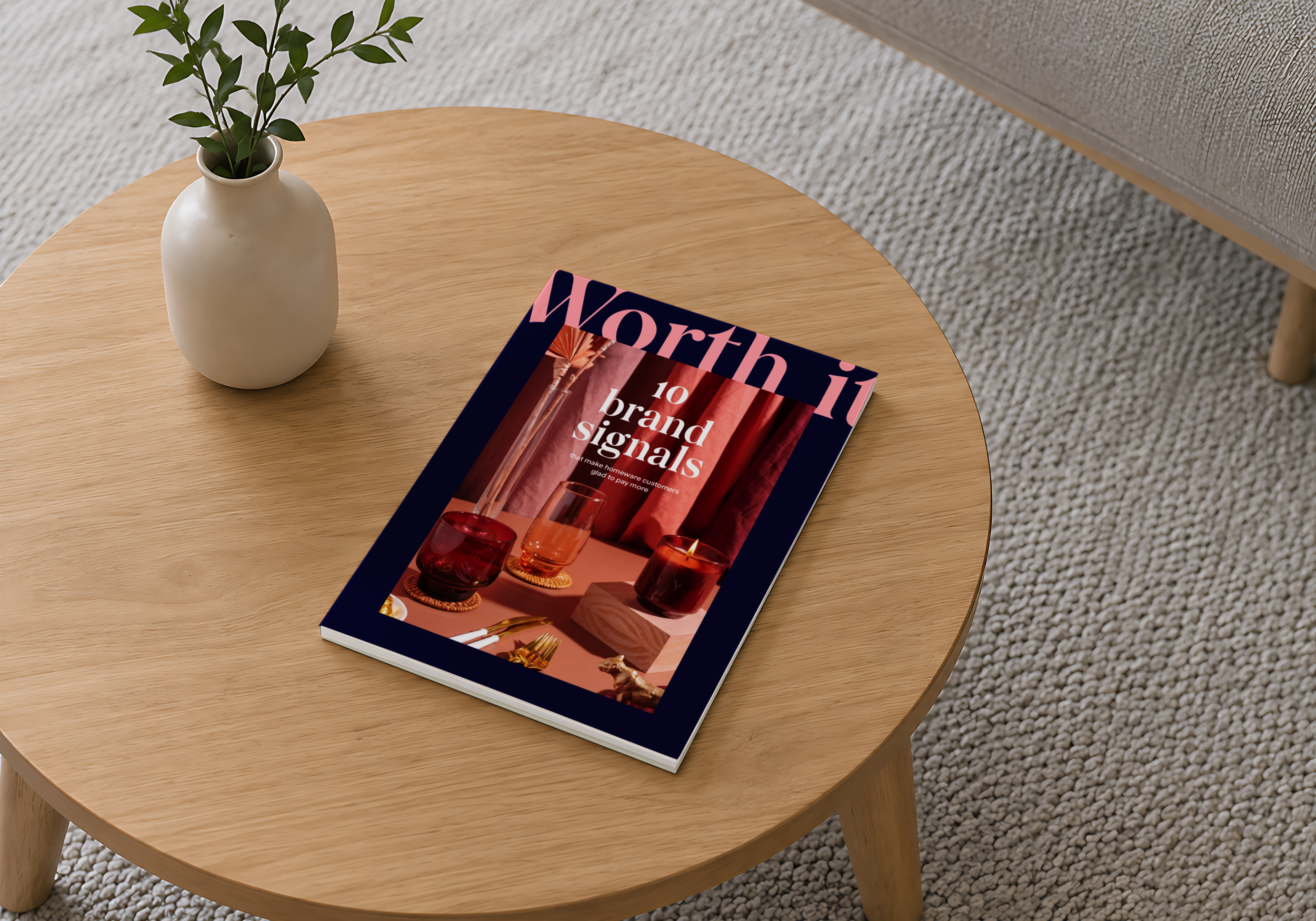
Find the signals your brand is missing
Loaf nails three of the ten signals I see in every brand customers are happy to pay more for. The good news? You don't need all ten. You just need to know which one has the most room to grow.
My free guide, Worth It: 10 Brand Signals That Make Homeware Customers Glad to Pay More, walks you through each one, with a simple "try this" for every signal so you can start this week.
Want help choosing where to start? Book a brand call. It's a simple chat where we get to know your business and where you're at.
-
Loaf's latest brand evolution was created by branding agency Otherway, covering strategy, identity, tone of voice, design and illustration. You can see the case study on their website.
-
Most sofa brands lead with product, price and finance. Loaf leads with personality: a witty, friendly tone of voice, a distinctive Loaf Blue and imagery that shows sofas in real, lived-in homes. It sells a feeling, not just furniture.
-
Look at what everyone else in your category leads with, then do something different. If competitors show plain product shots, show your product in real life. If they all sound the same, find a voice and a point of view that's unmistakably yours.
-
Brand signals are the cues customers use to judge your value before they read the price, like your packaging, imagery, tone of voice and the shops you're stocked in. Strong signals make customers glad to pay more. My free 10 Brand Signals guide covers all ten.
-
Home is personal, so people buy from brands they feel a connection with. A real, human voice tells customers someone thoughtful is behind the product, and thoughtful is worth paying for.
-
Both have a place, but lifestyle imagery does the selling. A product on white tells people what it is. A product in a real room tells them who it's for and how it'll feel to own it.
-
Yes. When customers feel an emotional connection to a brand, price becomes less important. Leading with personality instead of discounts builds the kind of loyalty that lets you charge what you're worth.
-
Absolutely. Trumpet is a brand and design studio for home and lifestyle founders, from brand strategy and identity to packaging and tone of voice. If you'd like your brand to feel more like Loaf, book a brand call